
Heat-resistant quartz countertops have become one of the most in-demand choices for modern kitchens and commercial interiors due to their balance of durability, aesthetics, and thermal performance. As homeowners and designers prioritize both function and long-term value, understanding how Heat Resistant Quartz Countertops perform under real kitchen conditions is essential for making informed decisions.
Manufacturers like Hyundai L&C have helped advance engineered stone technology, producing quartz surfaces that are not only visually appealing but also engineered for improved heat resistance, stain protection, and structural consistency. In this guest post, we explore the science, benefits, and practical applications of Heat-Resistant Quartz Countertops and why they remain a leading surface solution in 2026.
What Are Heat-Resistant Quartz Countertops?
Heat-resistant quartz countertops are engineered stone surfaces made primarily from natural quartz crystals combined with resin binders and pigments. Unlike natural stone slabs that vary in composition, quartz countertops are manufactured under controlled conditions to ensure uniform strength and appearance.
The “heat-resistant” characteristic refers to the surface’s ability to withstand moderate temperature exposure without immediate damage such as discoloration, cracking, or warping. However, it is important to note that while Heat-Resistant Quartz Countertops perform well under typical kitchen conditions, they are not completely heat-proof.
These surfaces are commonly used in:
- Residential kitchens
- Luxury bathrooms
- Commercial food preparation areas
- Hospitality and retail environments
Their popularity stems from their balance of durability, aesthetic flexibility, and relatively low maintenance requirements compared to traditional stone surfaces.
How Heat-Resistant Quartz Countertops Work
The performance of Heat-Resistant Quartz Countertops is largely determined by their engineered composition. Quartz itself is one of the hardest minerals on Earth, contributing to the surface’s durability and scratch resistance.
Resin Binding System
Quartz particles are bound together using polymer resins. These resins improve structural integrity but also introduce thermal limitations. When exposed to excessive heat, the resin can soften or discolor.
Thermal Stability in Engineered Stone
Thermal stability refers to a material’s ability to maintain its structure when exposed to temperature changes. In Heat-Resistant Quartz Countertops, thermal stability is achieved through:
- High quartz content (typically 90–95%)
- Advanced resin formulations
- Controlled curing processes during manufacturing
Heat Deflection Considerations
While quartz performs well under moderate heat, sudden temperature spikes, such as placing a hot pan directly from the stove, can exceed the resin’s heat deflection threshold. This is why protective measures like trivets are still recommended.
Key Benefits of Heat-Resistant Quartz Countertops
Heat-resistant quartz countertops offer a wide range of advantages that make them a preferred choice for homeowners, architects, and commercial designers.
1. Consistent Aesthetic Appeal
Unlike natural stone, quartz surfaces offer uniform patterns and colors, making design planning easier and more predictable.
2. Strong Heat Performance
While not fully heat-proof, these countertops handle everyday kitchen temperatures well, especially when proper care is followed.
3. Scratch and Impact Resistance
Quartz is one of the hardest minerals, making these surfaces resistant to scratches, chips, and general wear.
4. Low Maintenance Requirements
Unlike porous stones such as marble, quartz does not require sealing. Routine cleaning with mild soap and water is usually sufficient.
5. Hygienic Surface
Non-porous properties help prevent bacterial growth, making Heat Resistant Quartz Countertops suitable for food preparation areas.
Heat-Resistant Quartz Countertops vs Natural Stone
When comparing heat-resistant quartz countertops with natural stone options like granite or marble, several differences stand out.
Heat Performance
- Granite: Naturally heat-resistant but still susceptible to thermal shock
- Marble: More sensitive to heat and staining
- Quartz: Moderate heat resistance, but resin limits extreme exposure tolerance
Maintenance
Quartz requires less maintenance since it does not need sealing. Natural stone, especially marble, requires periodic sealing to maintain performance.
Appearance Consistency
Quartz offers controlled patterns and colors, while natural stone varies significantly from slab to slab.
Durability
All three materials are durable, but quartz offers a more balanced combination of scratch resistance and low-maintenance convenience.
Common Applications of Heat-Resistant Quartz Countertops
Heat-resistant quartz countertops are versatile and suitable for multiple environments.
Residential Kitchens
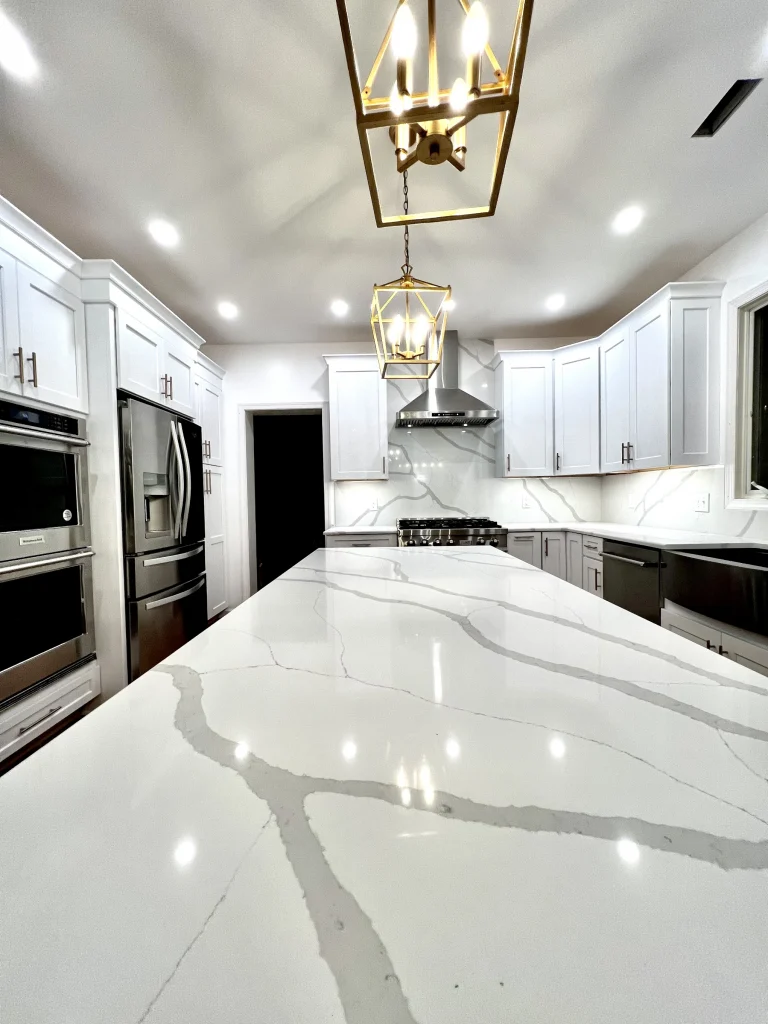
Ideal for homeowners seeking a stylish yet functional cooking space. Quartz works well for islands, countertops, and backsplashes.
Commercial Spaces
Restaurants, cafés, and hotels benefit from quartz due to its durability and hygiene benefits.
Bathroom Vanities
Quartz resists moisture and humidity, making it ideal for bathroom environments.
Office and Retail Interiors
Its professional appearance and durability make it suitable for reception desks and display counters.
Maintenance Tips for Long-Lasting Performance
To maximize the lifespan of Heat-Resistant Quartz Countertops, proper care is essential.
Daily Cleaning
- Use mild dish soap and warm water
- Wipe with a soft cloth or sponge
Heat Protection
- Always use trivets or heat pads
- Avoid placing hot cookware directly on the surface
Avoid Harsh Chemicals
- Do not use bleach or abrasive cleaners
- Avoid strong acidic substances for prolonged exposure
Prevent Physical Damage
- Use cutting boards instead of cutting directly on the surface
- Avoid dropping heavy cookware
Installation Considerations
Proper installation plays a major role in the long-term performance of Heat-Resistant Quartz Countertops.
Professional Fabrication
Quartz slabs must be cut and installed by trained professionals to prevent stress fractures and ensure proper alignment.
Support Structure
Cabinetry must provide consistent support to prevent flexing, which can lead to cracks over time.
Seam Placement
Minimizing visible seams improves both aesthetics and structural integrity.
Temperature Awareness
Installers should ensure proper spacing around heat sources like ovens and cooktops.
Why Manufacturers Like Hyundai L&C Matter
The quality of Heat-Resistant Quartz Countertops depends heavily on manufacturing precision and material innovation. Companies like Hyundai L&C play a key role in advancing engineered stone technology through:
- Improved resin formulations for better thermal stability
- Enhanced quartz compaction techniques
- Expanded design collections for modern interiors
- Consistent quality control standards
These innovations help ensure that quartz surfaces continue to meet the evolving demands of both residential and commercial markets.
Future Trends in Quartz Surface Technology
The future of Heat-Resistant Quartz Countertops is shaped by innovation in material science and sustainability.
1. Improved Heat Resistance Formulations
Manufacturers are developing resins with higher thermal tolerance to reduce the risk of heat damage.
2. Sustainable Production Methods
Eco-friendly manufacturing processes are becoming a priority, reducing environmental impact.
3. Ultra-Realistic Stone Replication
Advanced printing and pigment technologies allow quartz to mimic natural stone even more closely.
4. Smart Surface Integration
Future countertops may include embedded sensors for temperature monitoring and maintenance alerts.
Final Thoughts
Heat-resistant quartz countertops continue to be a top-tier choice for homeowners and designers seeking a balance of durability, aesthetics, and practicality. While not completely impervious to heat, their performance under everyday kitchen conditions makes them a reliable and attractive surface solution.
With ongoing advancements from manufacturers such as Hyundai L&C, quartz surfaces are expected to become even more resilient, sustainable, and design-flexible in the coming years.
For anyone planning a kitchen renovation or commercial build, Heat-Resistant Quartz Countertops remain a smart investment that delivers long-term value, style, and performance.